

Edo Avant Garde and the Astounding Influence of Japanese Folding Screens on Contemporary Art
I wasn’t sure what to make of an invite to Linda Hoaglund's Edo Avant Garde, a rarely seen documentary chronicling the far-reaching influence of Edo-era Japanese folding screens, slated to kick off the Brand Library’s REEL ART series. Truth be told, I didn’t know Edo (pronounced “eh-dough”) from Play-Doh, nor did I have the foggiest idea why a filmmaker would attach it to a French phrase synonymous with artistic innovation.
It turns out that Edo refers to both a thriving city (Tokyo today) that was Japan's cultural and commercial center, and a time span, from 1603 to 1867, when Samurai roamed the countryside. Japan was a hermit kingdom then, notorious for booting out Catholic priests and for putting the kibosh on foreign influence and trade. As for “avant garde,” Hoaglund threw that in, hyphenless, as a nod to the future Who’s Who of European artistes, steeped in Romanticism, that went rogue the second they were exposed to Japanese art.
Lacking those expository details beforehand, I might have sat the film out if I hadn’t noticed that it would be preceded by a tour of the Shoseian Whispering Pine Tea House, an arrow’s flight away on the former Miradero estate grounds. Stepping into a realm where “when one enters the tranquil space, they are gently wrapped like a bird in a nest,” promised respite from the wrecking ball policies of a philistine administration seemingly hellbent on abolishing the arts altogether. I gladly took the bait.
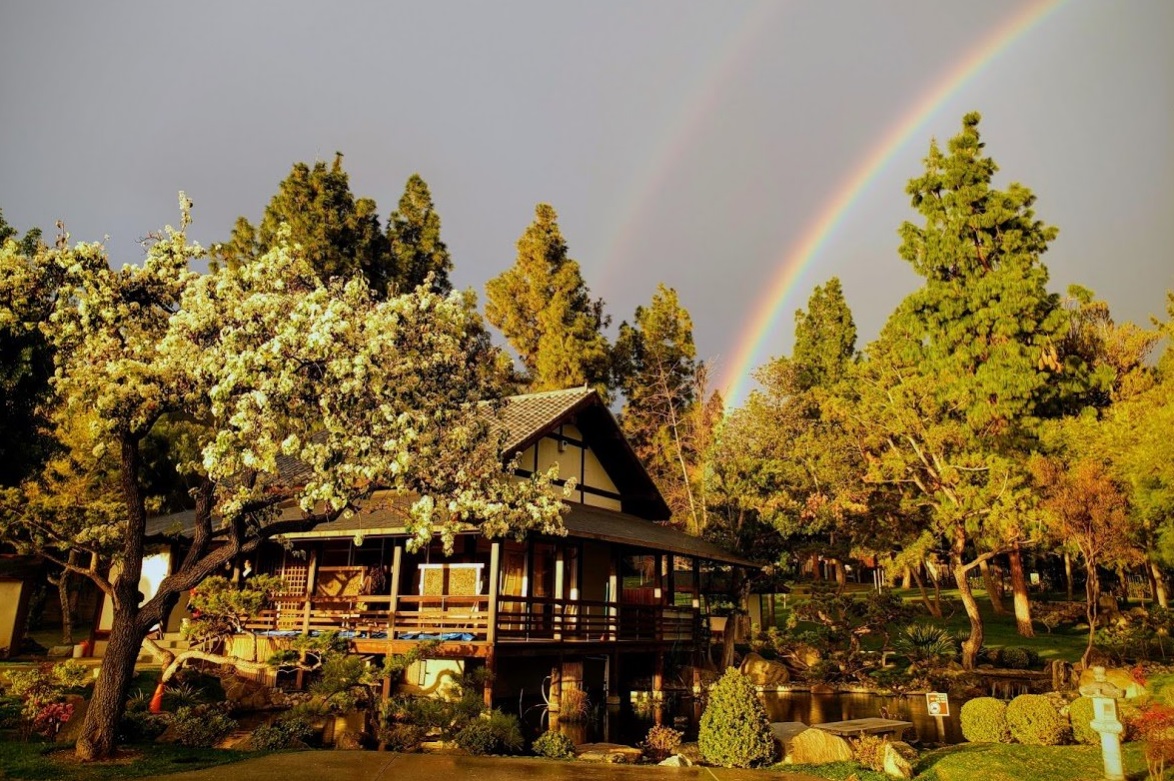
Sure enough, basking in the serenity of a Shinto shrine surrounded by zen gardens, koi ponds, and aquakinetic sculptures, listening to the dulcet tones of kimono-clad docents field the citizenry’s queries about ceremonial formalities, had the desired effect. Blissful attendees exited the tea house in single file, mimicking a line of monks trekking across Brand Park, ascending a series of stairways leading to the theater. When the last Costco white chocolate and macadamia nut cookie had been snatched from a faux silver serving tray, it was showtime.
Ninety minutes later, I was, to put it mildly, absolutely floored at discovering just how oblivious I’d been to the considerable debt every art movement that’s broken away from Classicism over the past 150 years owes to the Edo period’s large-scale, yet somehow overlooked, byōbu (“wind walls”).
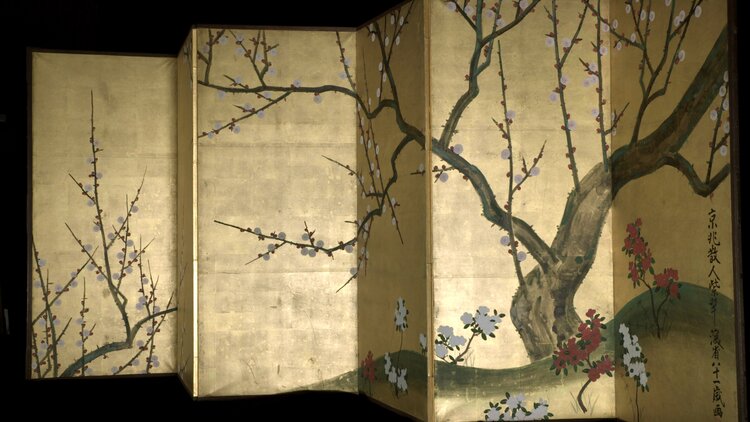
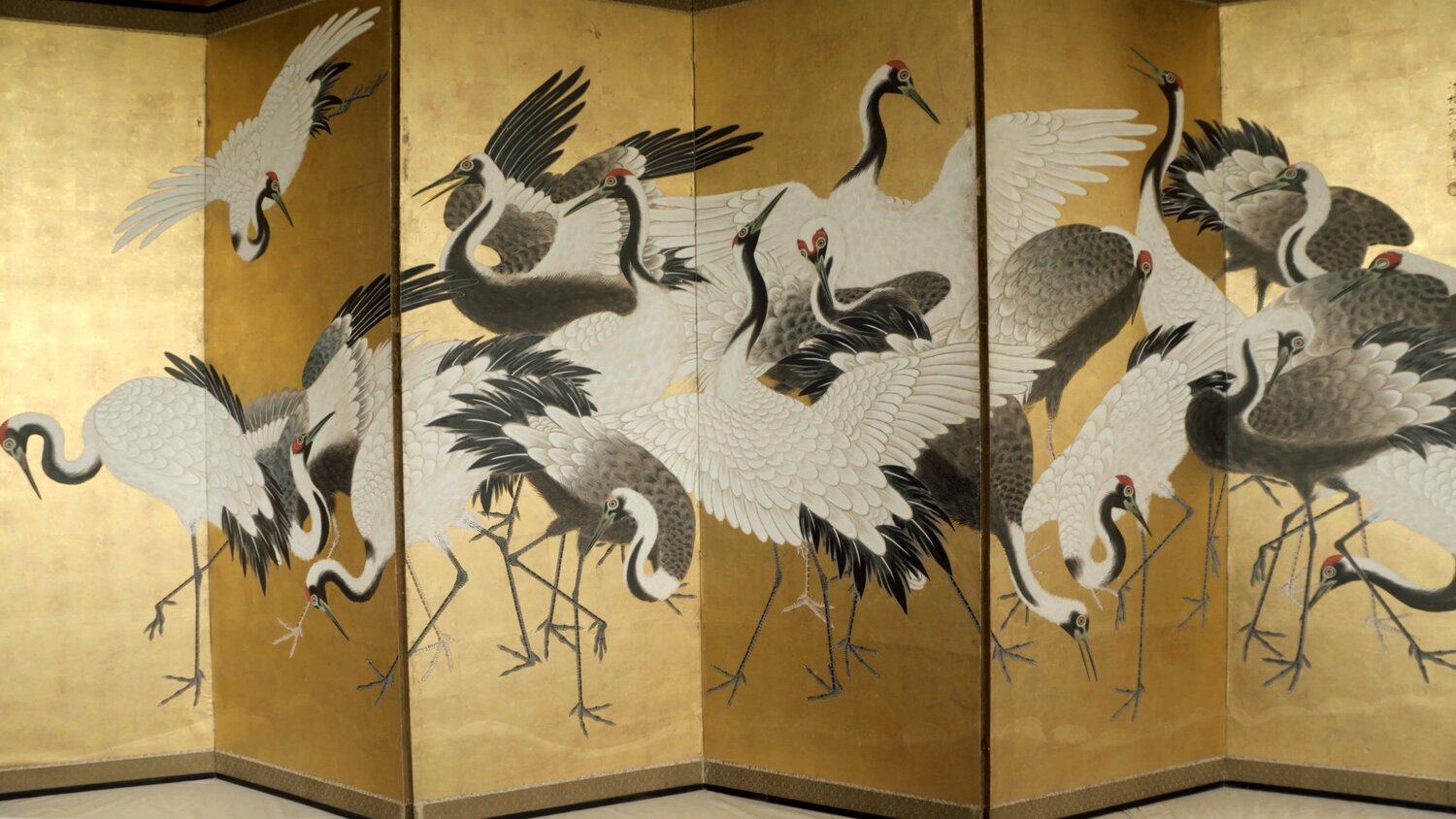
These imposing objets d’arte, that I’d never given a second glance to in great metropolitan museums when I’d passed them en route to commune with the mummies, were typically six 5’x10’ joined panels, hinged together to fold like an accordion. Often paired with a related set of six more panels, byōbu were humble in certain respects, lavish in others. Many artists declined to sign their names. Deployed as windbreakers or room dividers in drafty homes, palaces, and temples, the handiwork was as practical as it was contemplative.
That dichotomous nature also extended to the ruling class Samurai who commissioned and consumed byōbu. Their lot in life is encapsulated by the phrase, “the chrysanthemum and the sword” (translation of a translation: “first the poetry, then the butchery”). Edo Avant Garde’s interviews with art historians, collectors, and curators divulge that those warriors fortunate enough to have survived the occupational hazards amassed substantial resources to throw at their domestic HVAC concerns.
Liberal use of gold leaf backgrounds signified affluence for byōbu buyers, with the added advantage of making a piece seem lit from within. In candlelight—the primary nighttime light source in, say, the year 1673—the thinner-than-paper alloy emitted a soothing, supernal glow.
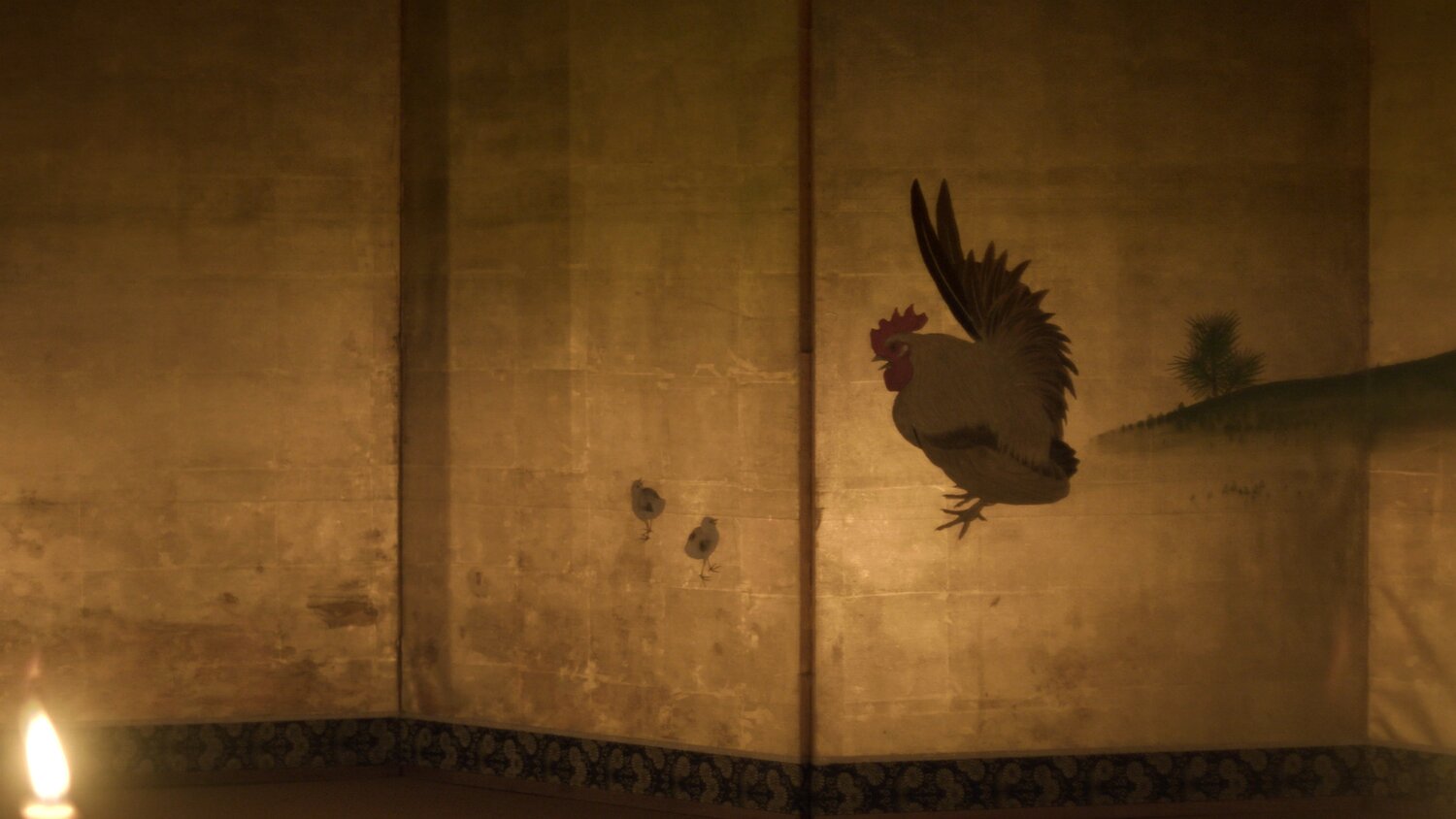
A simple scene like a covey of quails lurking in a clump of reeds took on a timeless quality set against gilded representations of ground and sky.
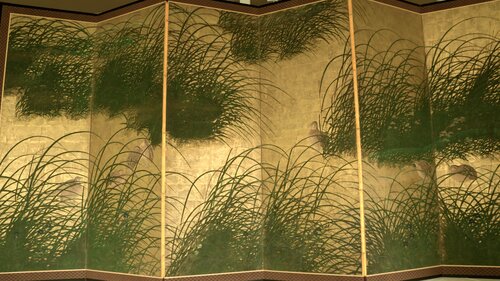
Space was not at a premium. Crane-crazed and cherry blossom-obsessed painters might place these symbols of good luck and prosperity in every panel. They could also go the other way, draft a lone goose flapping on panel #3, add a few stalks of feather grass to panels #5 and #6, then call it a day. Elements could stretch across multiple panels or none. Whether a screen was busy or empty, what Edo-era artists didn’t paint was as impactful as what they did.
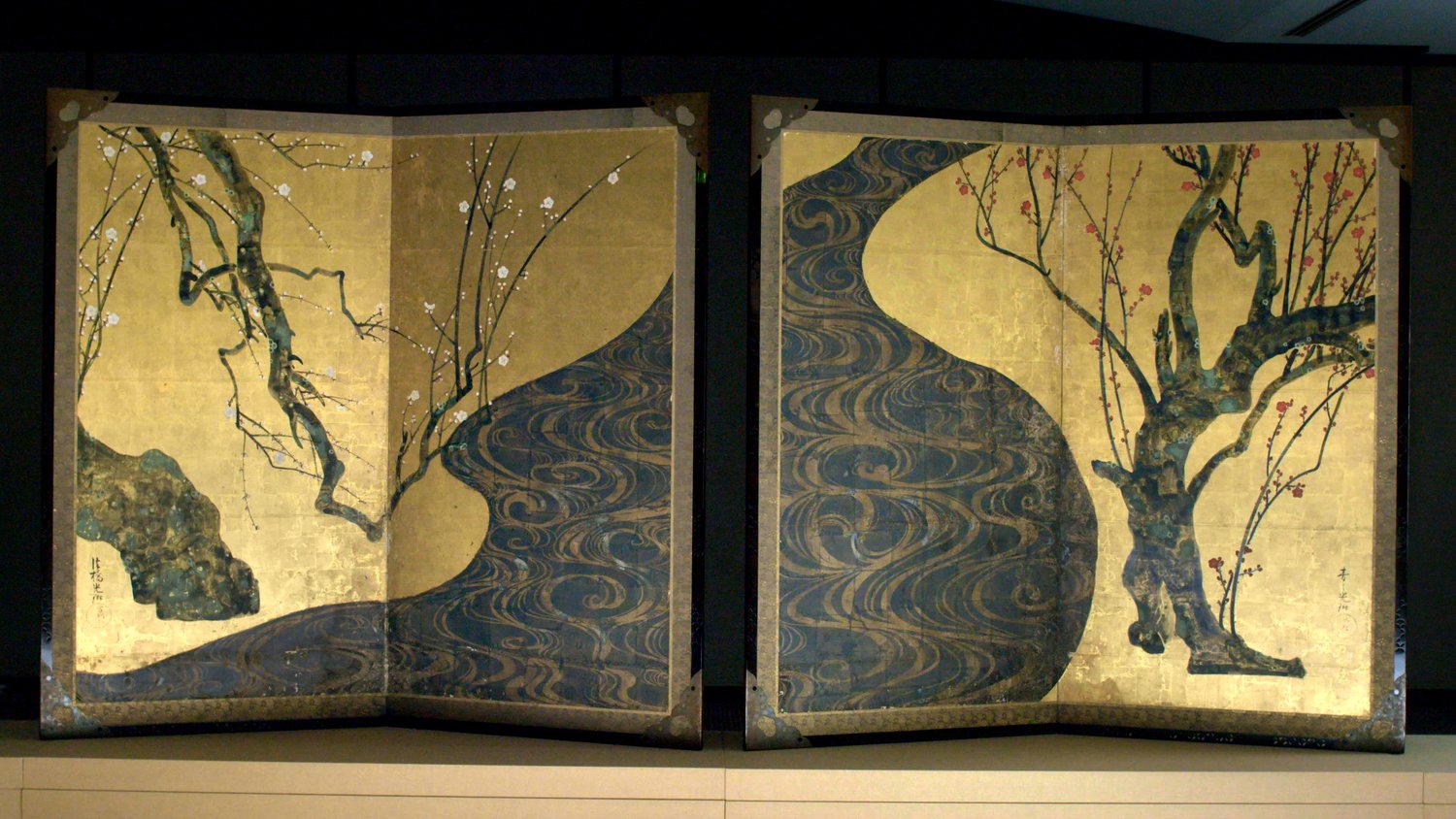
However, as of 1867, that impact had yet to be felt outside the hermit kingdom. Coincidentally enough, no sooner had the isolationist Edo era reached its dramatic denouement (the sudden appearance of four US warships in Edo Bay dispatched on an operation to force trade with the West had its theatrical aspects) than Japan’s new ruling consortium accepted Napoleon III’s overtures to flaunt the nation’s artistic legacy at the upcoming Paris World’s Fair.
How all those screens and prints were conveyed from a volcanic Pacific Rim island to a Gallic capital is lost to history—unlike the reaction of the rest of the world when it found out what it was missing. The Japanese Pavilion left staid European classicists shaken, stirred, and stunned. Stylized representations of humans and animals interacting with the natural world, drawn from non-rigid perspectives, were entirely alien to Western doctrine.
Alternating shots of then-shunned, now-priceless, 19th-century masterpieces with their Japanese forerunners, Edo firmly establishes that impressionism didn’t take hold because something was chemically imbalanced in Vincent Van Gogh’s brain or because the nascent field of ophthalmology was incapable of correcting Claude Monet’s blurry vision. It exploded because the Japanese Pavilion offered Europeans a gold mine of things to look at and be influenced by. Liberated from the imperative to emulate medieval anatomical correctness and ruthlessly linear perspectives, capturing impressions rather than exactitudes became the order of the day.
Eventually, impressionism veered into cubism, which morphed into surrealism, transmuted into dadaism, gave rise to abstract expressionism, and led to minimalism, not to mention every other ism extant. Once you realize how sweeping the Edo-era influence on contemporary art is, you start noticing it everywhere. It’s undeniable. And there’s no apparent limit to its shelf life.
None of this would have been as readily apparent if Edo hadn’t overachieved in conception, cinematography, and sound recording. YouTube isn’t hurting for documentaries about standing folding screens, though most concentrate on the small picture, the sausage-making. Edo doesn’t waste a second showing teams of craftspeople painstakingly fashioning the finished product. There’s no footage honing in on a conservator taking a full hour to restore just one square inch of a 300-year-old screen. Instead, Hoaglund focuses squarely on the big picture—the profound influence of Edo-ero paintings on modern art.
Once the opening montage lured me in, I knew I was in for some of the most captivating cinematography I’ve ever seen—from a 2019 documentary that was never theatrically released (COVID casualty) and never reviewed by the usual suspects, about a niche subject on no one’s lips. How did an arcane topic attract the top-tier technicians required to turn Edo into a visual powerhouse?
In a nutshell, NHK, the BBC of Japan, supplied the talent, most presciently ace cinematographer Kasamatsu Norimichi. The public station came onboard when it learned that Hoaglund, the daughter of a missionary born and raised in Kyoto, a known directorial quantity who’s managed to subtitle some 250 Japanese films into English, was involved. It didn’t hurt that the project she pitched aligned perfectly with its mandate to share Japanese heritage with audiences in Japan and around the world.
Documentary aficionados are familiar with how Ken Burns made a career out of slowly panning and zooming in and out of sepia-toned, napkin-sized Civil War photographs. Those subtle camera movements animated still scenes, effectively bringing long-deceased characters back to life, riveting PBS audiences.
That same skill set is essentially what we get from lensman Norimichi, only he’s even more cunning at it, and he’s got vast swaths of surface area to work with. There’s no need to nurse scenes depicting nature interacting with culture in thousand-year-old green and dusty rose hues back to life—they’re already brimming with it.
These persons aren’t just looky-loos; they’re insinuating themselves into a tableau of wild irises, crows, sailing ships, or what-have-you. Edo-era painters believed all animate and inanimate objects have innate spirits that intertwine harmoniously. Everything’s alive. Everything’s in motion. Compare that with how non-human life forms and structures were portrayed half a planet away—i.e., quadrupeds as beasts of burden, bridges as lifeless contrivances built to get from Point A to Point B. In a play contest between Buddhist and Judeo-Christian mindsets, Edo brings the receipts .
Most people will be blown well enough away by the sumptuous camerawork alone. But the soundtrack—a hypnotic concoction of Stradivarian-quality Japanese stringed instruments and percussion consummately plucked, struck, or blown, an eloquent score attributed to Satoshi Takeishi and Shoko Nagai, and a visceral mix preternaturally sweetened with just the right touch of EQ and reverb—is equally compelling. Each painting gets its theme song, which subtly ducks in and out of the dialogue.
After treating us to one jaw-dropping screen after another, accompanied by expert commentary that’s never wearying, Edo calls upon LA’s own Joe Goode to hammer home the point that Edo-era art still inspires contemporary artists today.
Unsurprisingly, Goode, who first encountered Japanese Gutai painting (essentially abstract expressionism inspired by elements like drips, gobs, and splatters, which began showing up in Edo era works) when he worked at Pasadena’s Pacific Asia Museum and hung a show, doesn’t just like Japanese painters; he reveres them. In his own words:
“The Gutai painters gave us a ticket to go beyond what this controlled idea of abstract painting was. They were a total influence, much more so than any painters from New York. Because of these guys, I felt free to do anything I wanted.”
Goode’s moved on to the great art loft in the sky, but it’s evident that another successful contemporary LA area artist has been channeling her forebears from Edo.
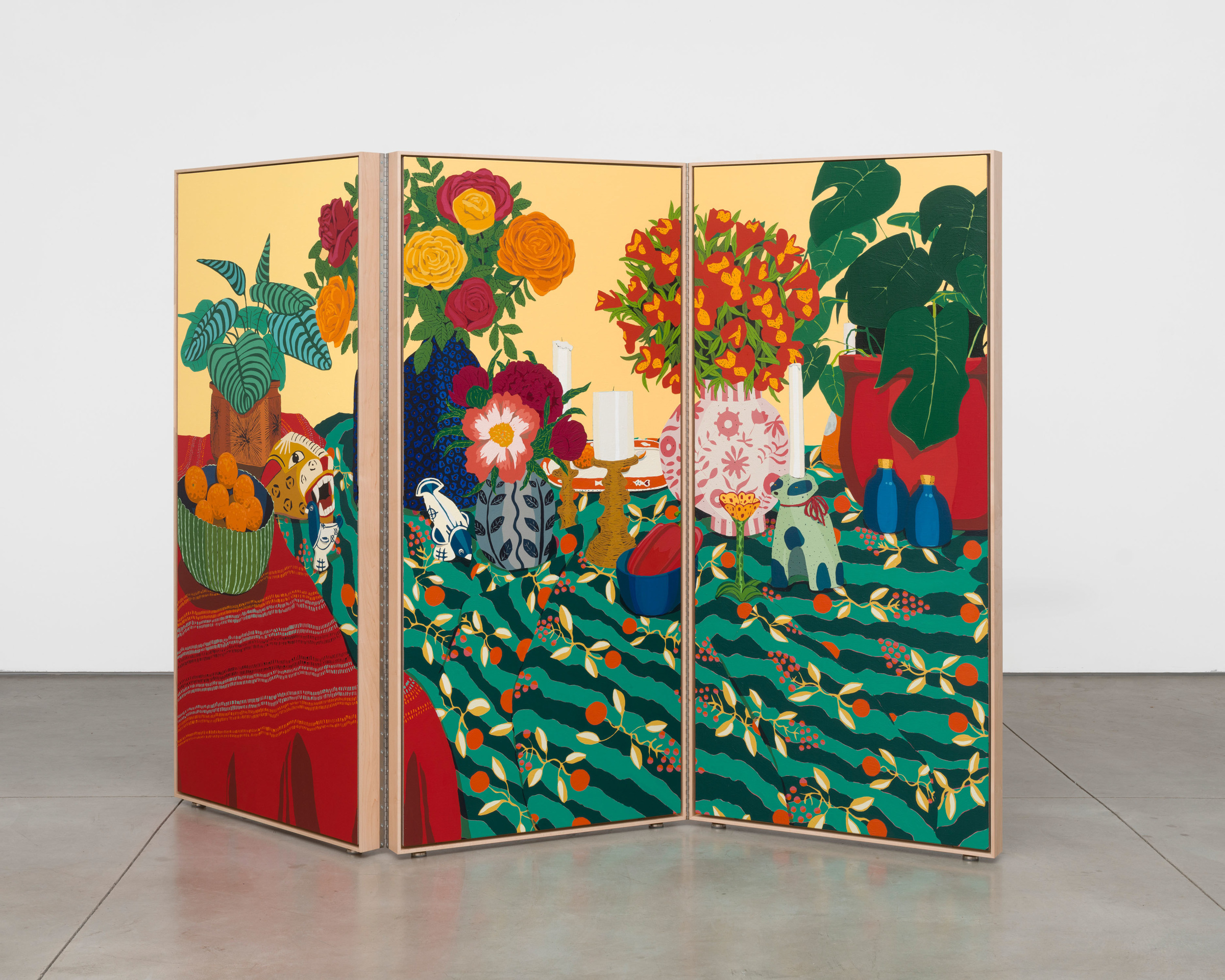
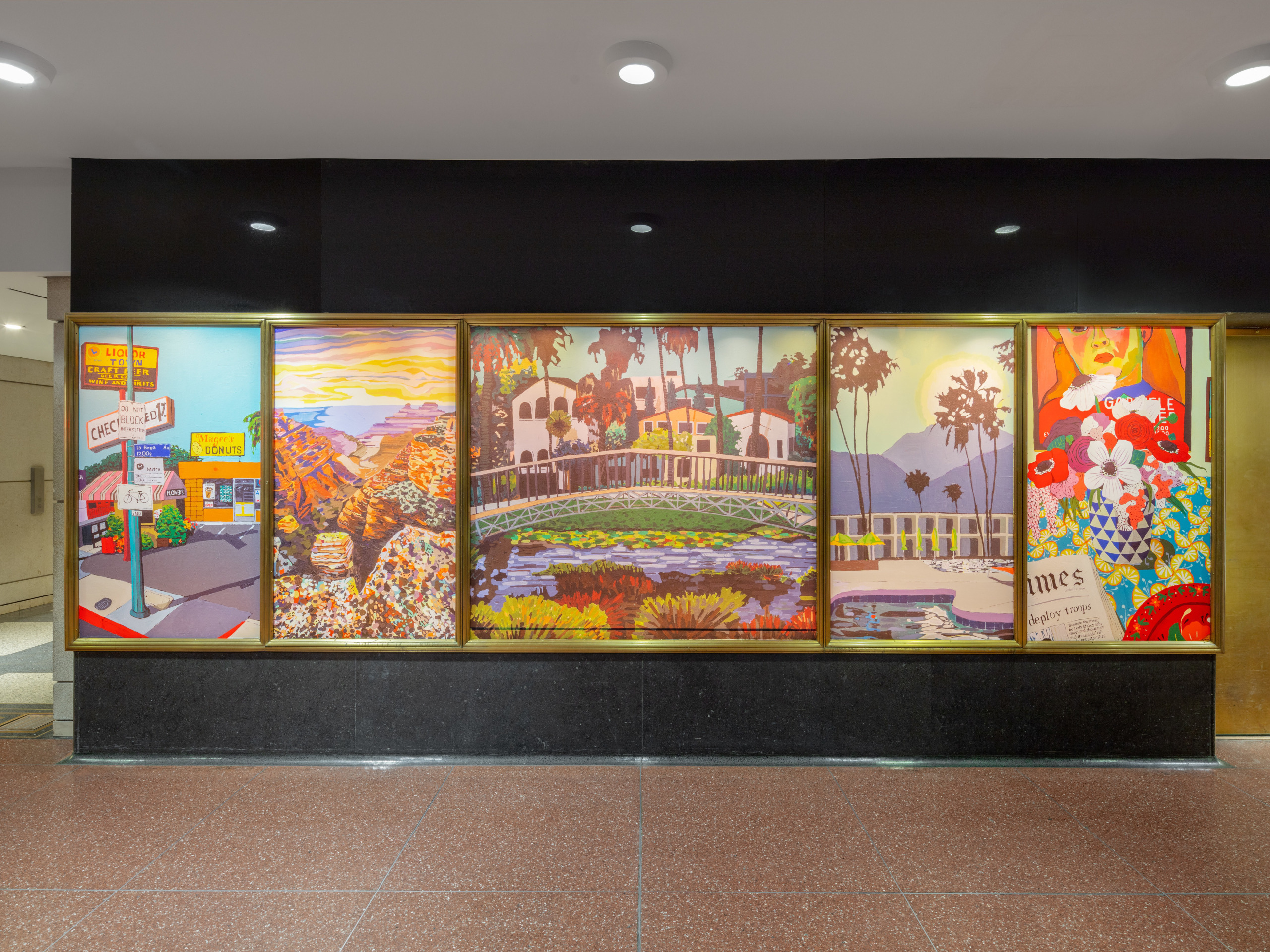
Hilary Pecis, named one of Artsy’s top trending ultra-contemporary Los Angeles artists, has not only adopted the standing folding screen form factor, but her Japanese-style work borrows a color palette from Van Gogh.
History’s foremost unsuccessful artist freely admitted, “All my work is based to some extent on Japanese art.”
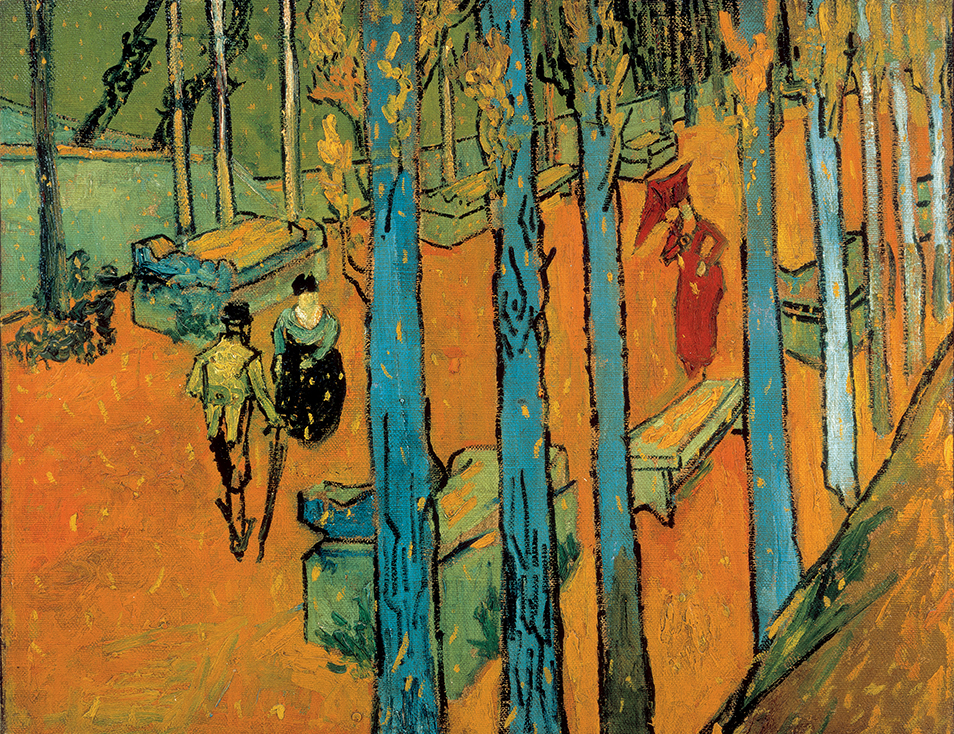
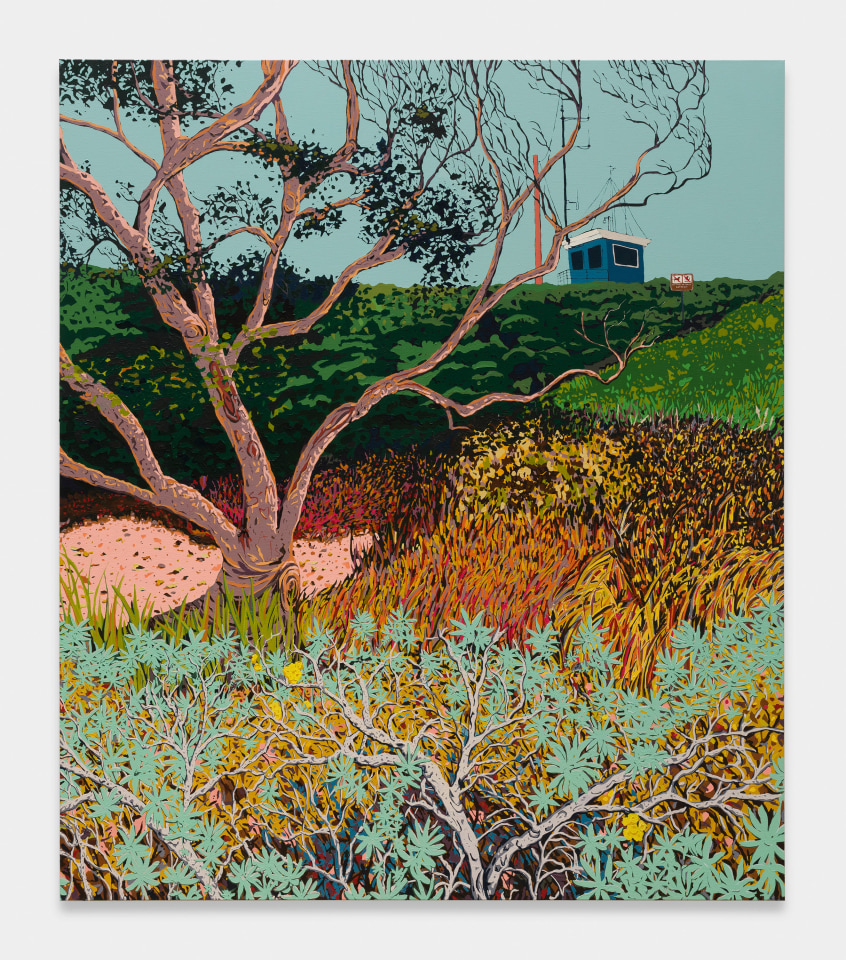
Pecis could say the same. Have a look:
And there’s something soul-stirring about multi-paneled paintings that spurred arguably today’s most experimental artist to try his hand at them—Cai Guo-Qiang’s traveling A Material Odyssey exhibit includes several eye-popping sets.
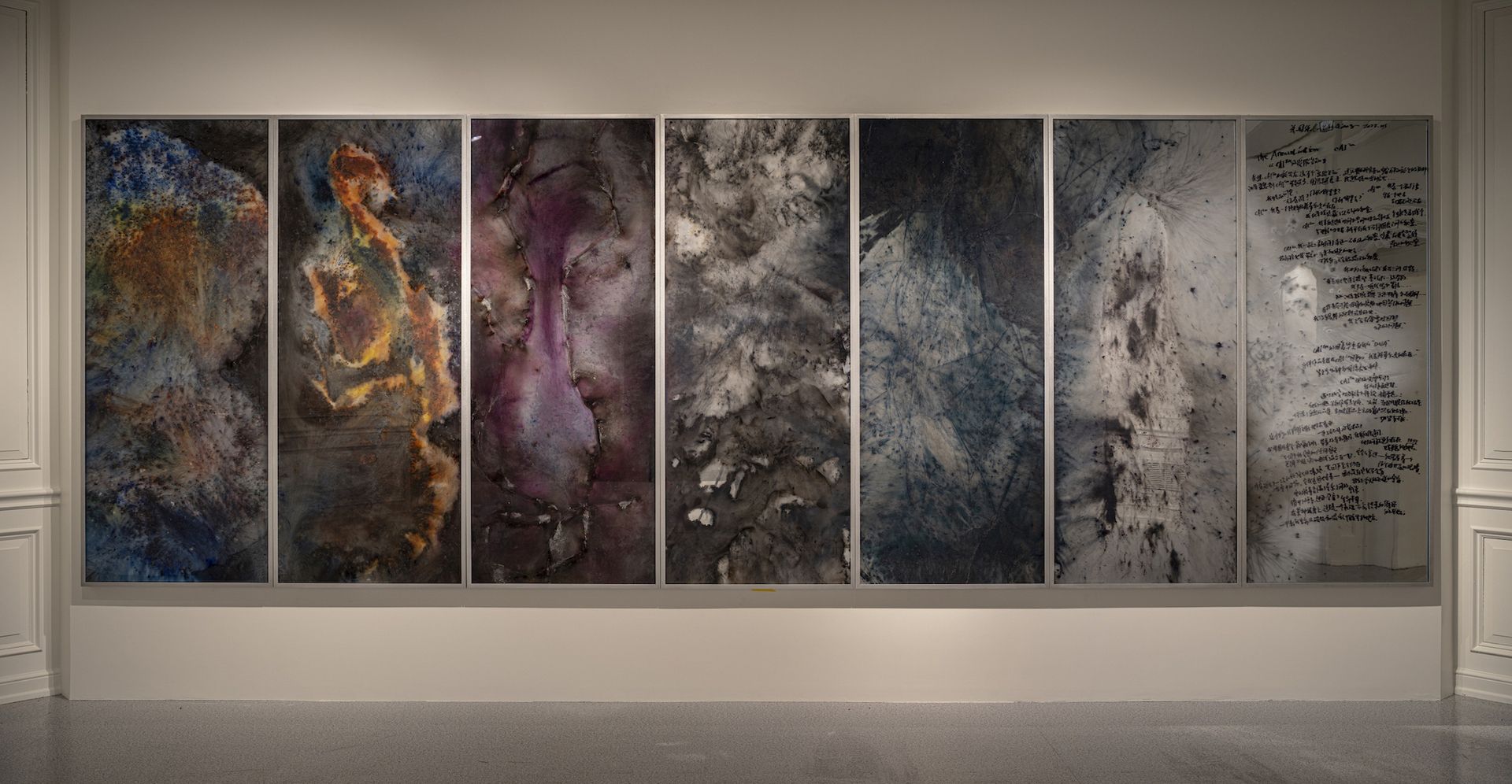
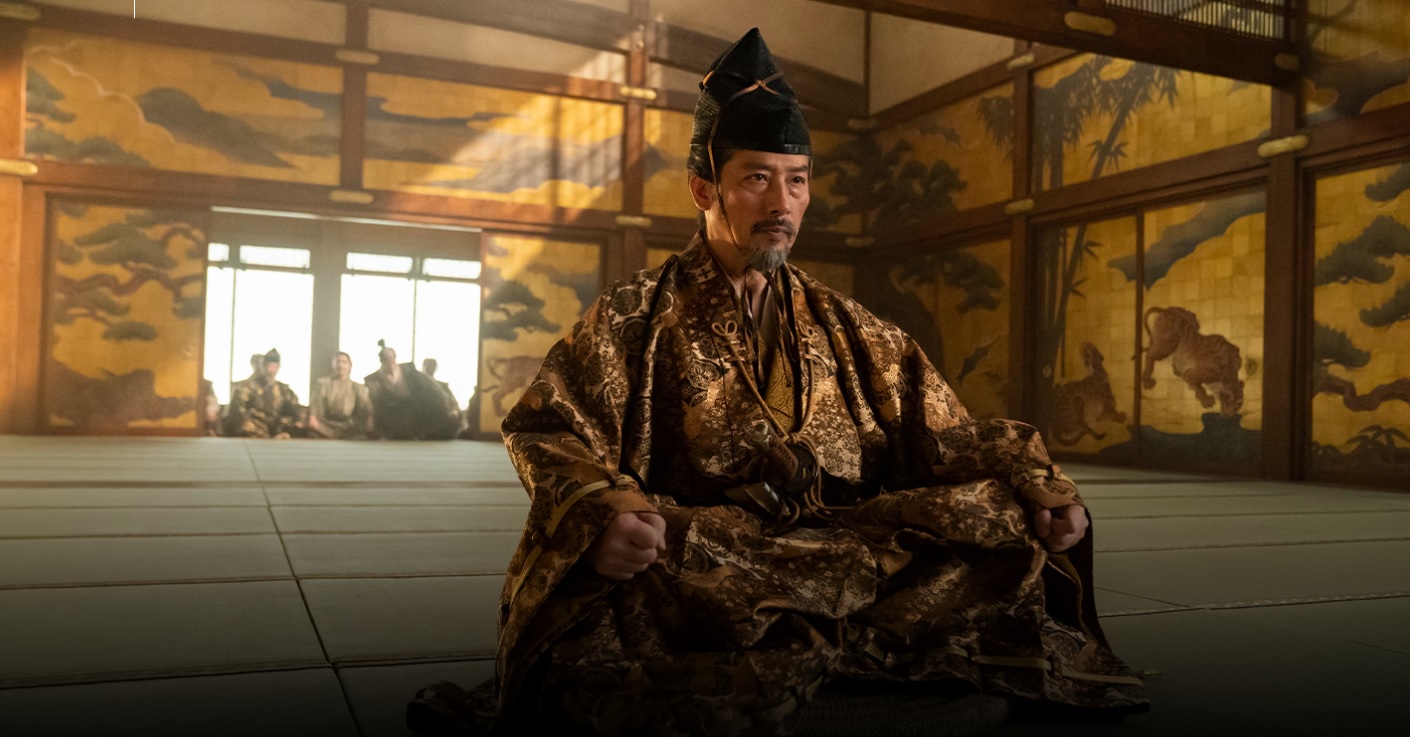
But planning a pilgrimage to a major metropolitan museum isn’t the only viable option to behold byōbu. Some of you have already been tuning in to Edo-era multi-paneled paintings without realizing it; wall-mounted instead of folded, they’re the set designer’s dreams splashed all over palace walls in the hit TV series Shogun.
Savoring Edo Avant Garde is like booking passage to a fleeting, floating world—a universe in a folding screen. If, in the afterglow, you should find yourself scheming to acquire and repurpose a cluster of Donald Juddish abandoned military base barracks to boldly display your forthcoming collection of Japanese standing folding screens in all their minimalist grandeur, don’t say I didn’t warn you.